2026 Housing Market Forecast: 3-Month Outlook for US Buyers & Sellers

Anúncios
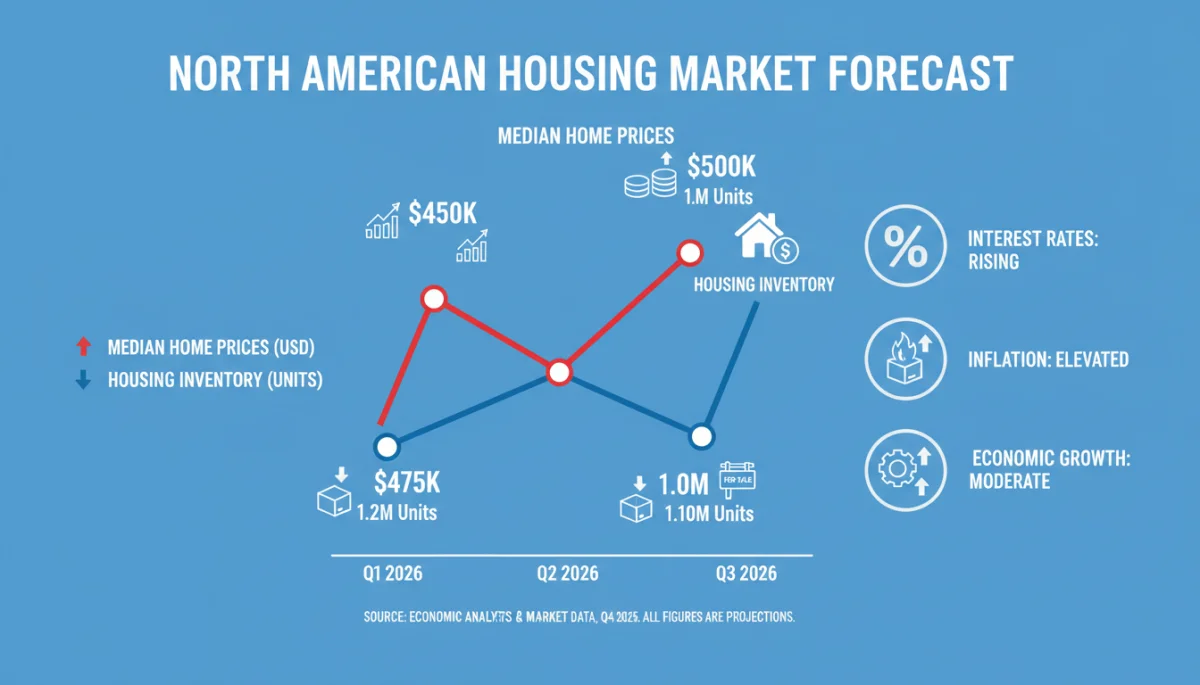
The 2026 housing market forecast anticipates a period of rebalancing, with potential shifts in interest rates and inventory levels impacting both buyers and sellers across the United States over the next three months.
Anúncios
As we step into 2026, the real estate landscape continues to evolve, presenting new challenges and opportunities. Understanding the 2026 housing market forecast is crucial for anyone looking to buy or sell property in the United States over the next three months. This period is expected to bring notable shifts that could significantly influence your real estate decisions.
Understanding the Current Economic Climate Affecting Housing
The broader economic environment plays a pivotal role in shaping the housing market. Inflation, interest rates, and employment figures all contribute to the overall health and direction of real estate. For the early months of 2026, several key economic indicators are set to influence market dynamics.
Anúncios
Inflation, while showing signs of moderation, remains a significant factor. Persistent inflationary pressures can lead to higher interest rates, directly impacting mortgage affordability. The Federal Reserve’s stance on monetary policy will be closely watched, as any adjustments to the federal funds rate will ripple through the mortgage market.
Interest Rate Projections and Their Impact
Mortgage rates are perhaps the most influential factor for both buyers and sellers. Forecasts suggest a potential stabilization or slight decrease in rates as the Federal Reserve aims for economic equilibrium. However, unexpected economic data could lead to volatility.
- Buyer Affordability: Lower rates can increase purchasing power, bringing more buyers into the market.
- Seller Motivation: Stable rates may encourage homeowners to sell, knowing replacement properties could be financed affordably.
- Market Volume: Rate stability often correlates with increased transaction volumes as uncertainty decreases.
Employment figures also offer insights into consumer confidence and financial stability. A robust job market generally supports housing demand, as more individuals have the financial capacity and confidence to invest in homeownership. Conversely, any softening in employment could temper demand.
In essence, the economic backdrop for the first three months of 2026 appears to be one of cautious optimism, with a keen eye on inflation and central bank actions. These elements collectively form the foundation upon which the housing market will operate, influencing everything from buyer behavior to seller expectations.
Inventory Levels: A Critical Factor for the 2026 Housing Market
Housing inventory, or the supply of available homes for sale, is a perpetual point of discussion and a major determinant of market conditions. Heading into 2026, inventory levels are expected to continue their tight trend in many areas, though some shifts might emerge.
Historically low inventory has been a hallmark of recent housing markets, fueling price appreciation and competitive bidding wars. While new construction has been attempting to alleviate this shortage, it often struggles to keep pace with demand, especially in rapidly growing regions.
New Construction Trends and Their Influence
The pace of new home builds will be crucial. Builders are navigating higher material costs and labor shortages, which can slow down the delivery of new units. However, as interest rates potentially stabilize, the incentive for builders to increase output might grow.
- Increased Supply: A surge in new construction could ease pressure on existing home inventory.
- Geographic Concentration: New homes are often concentrated in specific growth areas, leaving other markets still undersupplied.
- Price Point Diversification: Builders might focus on more affordable housing to meet broader demand.
Existing home inventory is also influenced by homeowner behavior. Many homeowners with low mortgage rates might be reluctant to sell, fearing they would trade up to a higher rate. This “lock-in effect” can keep a significant portion of potential inventory off the market.
However, life events such as job relocations, family changes, or retirement will always drive some level of existing home sales. The balance between these factors will dictate the overall inventory picture. A slight increase in inventory could offer more choices to buyers and potentially temper price growth, while a continued shortage would sustain a seller’s market.
Price Trends and Affordability in the Next Quarter
Home prices have seen significant appreciation over the past few years, making affordability a central concern for many prospective buyers. The 2026 housing market forecast suggests a more moderated pace of price growth, though regional variations will be substantial.
While a dramatic nationwide price correction is not widely anticipated, a slowdown in the rate of appreciation is likely. This shift would be influenced by a combination of factors, including interest rate stability, inventory adjustments, and overall economic sentiment.
Regional Price Disparities
It’s important to remember that the U.S. housing market is not a monolith. Different regions will experience varying price dynamics based on local economic conditions, population growth, and housing supply.
- High-Demand Metros: Major metropolitan areas with strong job markets may continue to see steady, albeit slower, price increases.
- Emerging Markets: Secondary cities experiencing an influx of residents and businesses could see more robust price growth.
- Overheated Markets: Some areas that saw explosive growth might experience a plateau or slight cooling as affordability limits are reached.
Affordability remains a critical challenge. Even with moderated price growth, high home values combined with elevated interest rates can strain buyer budgets. This could lead to a continued emphasis on smaller homes, more distant suburbs, or a longer saving period for down payments.
For sellers, understanding local market conditions is paramount. Pricing a home competitively, yet realistically, will be key to attracting buyers in a potentially less frenzied market. Buyers, on the other hand, might find more opportunities for negotiation in certain segments or regions, a welcome change from recent years.
Strategies for Buyers in the Early 2026 Market
Navigating the early 2026 housing market requires a strategic approach for buyers. With potential shifts in interest rates and inventory, being prepared and informed can provide a significant advantage. The days of simply offering above asking price and hoping for the best might be receding in some areas.
The emphasis for buyers should be on financial preparedness and market research. Understanding your budget, getting pre-approved for a mortgage, and knowing what you can truly afford are more critical than ever. This financial clarity allows you to act quickly when the right opportunity arises.
Key Buyer Tactics for the Next Three Months
As the market potentially rebalances, buyers have several tactics they can employ to improve their chances of success.
- Get Pre-Approved: A strong pre-approval letter signals to sellers that you are a serious and qualified buyer.
- Be Flexible: Consider expanding your search criteria to include different neighborhoods or home styles that might offer better value.
- Act Decisively, Not Impulsively: While the market might be less frantic, good homes still sell quickly. Be ready to make an informed offer when you find the right property.
- Work with a Local Agent: An experienced local real estate agent can provide invaluable insights into specific neighborhood trends and negotiation strategies.
Furthermore, buyers should be prepared for potential interest rate fluctuations. While forecasts suggest stability, having a clear understanding of how different rates impact your monthly payment is essential. Exploring different mortgage products, such as adjustable-rate mortgages (ARMs) if appropriate for your financial situation, could also be beneficial.
Patience might also be a virtue. While the market won’t necessarily favor buyers dramatically, the intense competition of previous years could ease, allowing for more thoughtful decision-making rather than rushed bids. Focusing on value and long-term investment potential will be key to a successful purchase.
Strategies for Sellers in the Early 2026 Market
For sellers, the early 2026 housing market presents a landscape that may require more strategic thinking than the hyper-competitive conditions of recent years. While it may still be a seller’s market in many areas, the degree of leverage could shift, making preparation and presentation crucial.
Sellers should focus on making their homes as appealing as possible to attract discerning buyers. This means considering necessary repairs, staging the home effectively, and ensuring it is priced correctly from the outset. Overpricing can lead to longer market times and eventual price reductions.
Optimizing Your Sale in a Shifting Market
To maximize their outcome, sellers should consider several proactive steps in the next three months.
- Professional Staging: Well-staged homes often sell faster and for higher prices.
- Strategic Pricing: Work with your agent to price your home competitively based on recent comparable sales and current market conditions, not just past peak prices.
- High-Quality Marketing: Professional photography, virtual tours, and effective online listings are non-negotiable.
- Be Prepared for Negotiations: While multiple offers may still occur, be open to reasonable negotiations on price or contingencies.
Understanding local market nuances is also vital. What sells quickly in one neighborhood might linger in another. An experienced real estate agent can provide critical insights into buyer preferences and market velocity in your specific area. They can also help navigate potential buyer demands, such as inspection contingencies or closing cost contributions.
For sellers who are also looking to buy, timing the sale and purchase can be complex. Consulting with real estate and financial professionals to develop a clear plan for both transactions will be essential to avoid being caught without a home or carrying two mortgages. The early 2026 market rewards sellers who are well-prepared, realistic, and adaptable.
Long-Term Outlook Beyond the First Quarter of 2026
While our focus has been on the immediate three-month outlook, it’s also valuable to consider how these short-term trends might influence the broader housing market throughout 2026 and beyond. The foundation laid in the first quarter will likely set the tone for the remainder of the year.
The rebalancing we anticipate in early 2026 could lead to a more sustainable housing market in the long run. A moderation in price appreciation and a gradual increase in inventory could create a healthier environment for both buyers and sellers, reducing some of the extreme volatility seen in recent years.
Potential Shifts for the Remainder of 2026
- Economic Stability: Continued progress in taming inflation and maintaining a strong job market will support housing demand.
- Demographic Trends: Millennial and Gen Z buyers entering prime homeownership ages will continue to drive underlying demand.
- Policy Changes: Government policies related to housing, zoning, and interest rates could introduce new dynamics.
The long-term outlook also hinges on how effectively housing supply can catch up with demand. While new construction faces hurdles, sustained efforts to build more homes, particularly in affordable categories, will be crucial for market equilibrium. Innovation in construction methods and materials could also play a role in addressing supply constraints.
Ultimately, the 2026 housing market is likely to be characterized by a shift towards greater normalcy, albeit with regional variations. Extreme price surges may become less common, replaced by more measured growth. This evolution suggests that strategic planning, adaptability, and informed decision-making will remain paramount for anyone engaging with real estate throughout the year.
| Key Market Factor | 3-Month Outlook (Early 2026) |
|---|---|
| Interest Rates | Expected stabilization or slight decrease, but potential for volatility. |
| Housing Inventory | Likely to remain tight in many areas, with gradual increases from new construction. |
| Home Prices | Moderated growth expected, with significant regional variations in appreciation. |
| Market Dynamics | Shifting from extreme seller’s market to a more balanced environment, requiring strategic approaches. |
Frequently Asked Questions About the 2026 Housing Market
A significant nationwide drop in home prices is not widely anticipated. Instead, most forecasts predict a moderation in the rate of price appreciation. Some overheated local markets might experience slight corrections or plateaus, but broad-based declines are unlikely given persistent demand and supply constraints.
Buyers in early 2026 should prioritize financial preparedness, including getting pre-approved for a mortgage and understanding their budget. Market research, working with a local agent, and maintaining flexibility in location or home type will also be crucial for finding opportunities and navigating competitive situations effectively.
Early 2026 can still be a good time to sell, though the market may require more strategic effort than in previous years. Sellers should focus on professional staging, competitive pricing, and high-quality marketing. Being prepared for negotiations and understanding local market nuances will help achieve a successful sale.
Interest rate stability or slight decreases could improve buyer affordability by lowering monthly mortgage payments. Conversely, any unexpected rate hikes would further strain budgets. Buyers should factor potential rate fluctuations into their financial planning and explore different mortgage options to secure the best terms.
Housing inventory remains a critical factor. Persistent low inventory will continue to support home prices and favor sellers, while a gradual increase in available homes could offer more choices for buyers and temper price growth. New construction will be key to alleviating long-standing supply shortages in many regions.
Conclusion
The 2026 housing market forecast for the next three months points to a dynamic period of rebalancing across the United States. Both buyers and sellers will need to remain adaptable and well-informed to navigate shifts in interest rates, inventory levels, and price trends. While the market may evolve from the extreme conditions of recent years, opportunities will undoubtedly arise for those who approach their real estate decisions with careful planning and strategic insight. Staying abreast of local market nuances and economic indicators will be paramount for success in this evolving landscape.
