Medicaid Expansion 2026: Eligibility for Enhanced Healthcare

Anúncios
New Medicaid expansion opportunities in 2026 will significantly impact healthcare access, requiring individuals to understand updated eligibility criteria to determine if they qualify for enhanced coverage benefits.
As we approach 2026, significant changes are on the horizon for healthcare coverage in the United States, particularly concerning Medicaid. The prospect of New Medicaid Expansion Opportunities in 2026: Are You Eligible for Enhanced Healthcare Coverage? is a critical topic for millions of Americans seeking affordable and comprehensive health services. Understanding these evolving guidelines is paramount for individuals and families to secure the medical support they need.
Anúncios
Understanding the evolving landscape of Medicaid
Medicaid, a joint federal and state program, provides health coverage to millions of low-income Americans, including children, pregnant women, elderly adults, and individuals with disabilities. Historically, eligibility criteria have varied significantly by state, creating a complex patchwork of coverage across the nation. The Affordable Care Act (ACA) introduced a pathway for states to expand Medicaid to nearly all non-elderly adults with incomes up to 138% of the Federal Poverty Level (FPL).
While many states have adopted this expansion, some have not, leaving a coverage gap. As we look towards 2026, ongoing policy discussions and potential legislative changes aim to further refine and potentially broaden Medicaid’s reach. These discussions often center on increasing federal incentives for non-expansion states, streamlining enrollment processes, and addressing health equity concerns. For individuals, staying informed about these evolving policies is crucial to anticipate how they might affect their access to healthcare.
Anúncios
The historical context of Medicaid expansion
Medicaid was established in 1965 as part of the Social Security Act. Its initial scope was limited, primarily serving families receiving cash assistance. Over decades, its role expanded, particularly with the passage of the ACA in 2010. The ACA’s optional Medicaid expansion offered states substantial federal funding to cover more adults, which led to a significant reduction in the uninsured rate in participating states. However, the Supreme Court’s 2012 ruling made this expansion optional, leading to the current state-by-state variation.
- Initial program scope focused on specific low-income groups.
- ACA provided a major impetus for broader adult coverage.
- Supreme Court ruling made expansion optional for states.
- Current landscape shows uneven coverage across the U.S.
The continuous evolution of Medicaid reflects a broader national debate on healthcare access and affordability. Policy makers constantly weigh the costs and benefits of expansion, considering its impact on state budgets, healthcare provider networks, and the health outcomes of vulnerable populations. For citizens, this means a dynamic environment where eligibility rules and available benefits can shift, necessitating proactive engagement with information sources like PrimeNewsy.
Key changes and new opportunities in 2026
The year 2026 is poised to bring several significant updates to the Medicaid program, presenting both challenges and opportunities for eligible individuals. These changes could stem from federal legislative action, new state-level initiatives, or adjustments to existing regulations designed to improve healthcare access and efficiency. One of the primary areas of focus is likely to be a renewed push for universal Medicaid expansion, encouraging remaining states to adopt the ACA’s full expansion model through enhanced federal matching funds or other incentives.
Beyond state expansion, we might see adjustments to income thresholds, particularly in response to inflation and economic shifts. There could also be a greater emphasis on specific populations, such as postpartum individuals, those with chronic conditions, or individuals transitioning out of the justice system, ensuring continuous care. Digital transformation efforts are also expected to accelerate, making the application and renewal processes more accessible and user-friendly. These combined factors could open doors for many who previously did not qualify or faced barriers to enrollment.
Potential federal and state policy shifts
Federal policy makers are continually evaluating ways to strengthen the Medicaid program. In 2026, this could translate into new legislation that provides greater financial support to states for expansion, potentially reducing the fiscal burden on state budgets. Such incentives could persuade holdout states to finally expand, thereby extending coverage to millions more low-income adults. States, in turn, may introduce innovative programs or waivers to tailor Medicaid benefits to their specific population needs, addressing unique health challenges within their communities.
- Increased federal funding for expansion.
- Streamlined inter-state eligibility transfers.
- Focus on specific vulnerable populations.
- Greater use of telehealth and integrated care models.
These policy shifts are not merely administrative adjustments; they represent a fundamental commitment to ensuring that more Americans have access to essential healthcare services. For individuals, this means a potential broadening of who is considered eligible and what services are covered. It is crucial to monitor these developments closely, as they could directly impact one’s ability to enroll or maintain coverage under Medicaid.
Who is eligible? Updated criteria for 2026
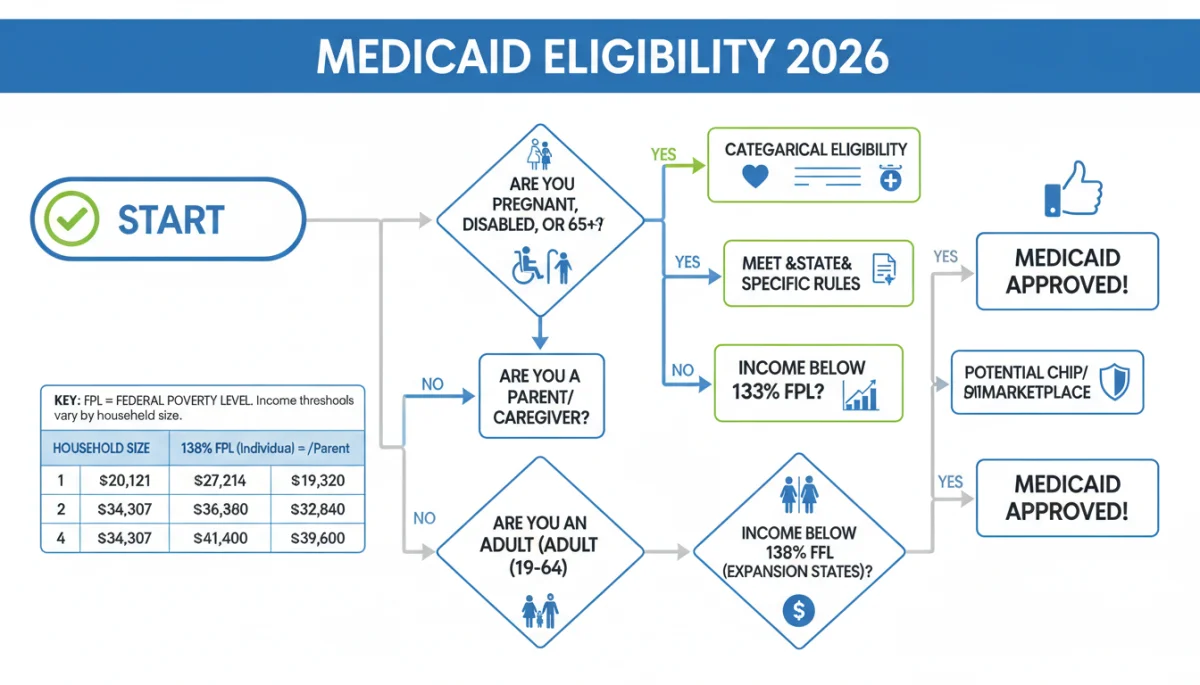
Determining eligibility for Medicaid can often feel complex, but understanding the core criteria is essential for anyone seeking coverage. In 2026, while the fundamental principles of Medicaid eligibility remain, there will likely be updated income thresholds and potentially new categories of individuals who qualify. Generally, eligibility is based on a combination of income, household size, and specific life circumstances such as age, pregnancy, disability, or parental status. The Federal Poverty Level (FPL) serves as a key benchmark, with many states expanding coverage to those earning up to 138% of the FPL.
However, beyond these general guidelines, specific state policies play a crucial role. Non-expansion states typically have much stricter eligibility requirements, often limited to very low-income parents, children, pregnant women, and individuals with disabilities. Expansion states, conversely, cover a broader range of low-income adults without dependent children. As 2026 approaches, it is vital to consult your state’s specific Medicaid agency or official websites for the most accurate and up-to-date information on income limits and qualifying conditions, as these figures are subject to annual adjustments.
One notable trend is the increasing focus on continuous eligibility for certain groups, aiming to reduce gaps in coverage. Some states are exploring options to extend postpartum Medicaid coverage from 60 days to 12 months, recognizing the critical health needs of new mothers. Additionally, there’s a growing movement to ensure that individuals with substance use disorders or mental health conditions have uninterrupted access to care through Medicaid, reflecting a more holistic approach to health.
Income and household size considerations
The Modified Adjusted Gross Income (MAGI) is the primary method used to determine income eligibility for most Medicaid applicants. MAGI takes into account taxable income and certain deductions, providing a standardized way to assess financial need. The FPL is updated annually by the federal government, meaning the exact income limits for Medicaid eligibility will also shift each year. For instance, an individual in an expansion state might qualify with an income up to approximately $20,120 in 2024, but this figure will be adjusted for 2026.
- MAGI is the standard for income calculation.
- FPL updates annually, affecting income limits.
- Household size directly impacts FPL thresholds.
- Specific deductions can lower MAGI.
It is important to remember that these income thresholds are not static; they are dynamic and reflect economic changes and policy adjustments. Therefore, even if you did not qualify for Medicaid in previous years, the new criteria in 2026 might place you within the eligible range. Regularly checking official state resources and using online eligibility tools can help you determine your potential qualification based on the most current figures.
Benefits of enhanced healthcare coverage through Medicaid
Enhanced healthcare coverage through Medicaid offers a comprehensive array of benefits that extend far beyond basic medical services. For eligible individuals, this coverage can be a lifeline, providing access to preventive care, specialized treatments, and essential support services that might otherwise be unaffordable. The breadth of services typically covered by Medicaid includes doctor visits, hospital stays, prescription medications, mental health services, and substance use disorder treatment.
Beyond these core services, many Medicaid programs also cover dental, vision, and hearing care, which are often excluded from other insurance plans. The emphasis on preventive care, such as regular check-ups and vaccinations, helps individuals manage their health proactively, preventing more serious and costly conditions down the line. For vulnerable populations, such as pregnant women, children, and individuals with disabilities, Medicaid often provides tailored services, including prenatal care, early intervention programs, and long-term care support.
Comprehensive services and cost savings
One of the most significant advantages of Medicaid is the substantial cost savings it provides. For those who qualify, many services come with little to no out-of-pocket costs, including premiums, deductibles, and co-payments. This financial relief can be transformative for low-income families, allowing them to allocate resources to other essential needs like housing and food, without sacrificing their health.
- Zero or low-cost premiums and deductibles.
- Coverage for a wide range of medical services.
- Access to preventive care and screenings.
- Specialized care for children and pregnant women.
Furthermore, Medicaid often covers non-emergency medical transportation, ensuring that beneficiaries can get to their appointments. The program also plays a crucial role in addressing chronic conditions by providing access to ongoing treatment and case management. This comprehensive support system not only improves individual health outcomes but also reduces the burden on emergency rooms, contributing to a more efficient healthcare system overall.
Navigating the application process for 2026
Applying for Medicaid can seem daunting, but with the right information and resources, the process can be straightforward. As we head into 2026, states are continuously working to streamline their application systems, often leveraging online portals and simplified forms to make it easier for eligible individuals to enroll. The primary method for applying for Medicaid is through your state’s Medicaid agency or through the Health Insurance Marketplace at HealthCare.gov.
Before you begin, it’s essential to gather all necessary documentation. This typically includes proof of income, household size, residency, and citizenship or lawful immigration status. Having these documents ready will significantly expedite your application. You will likely need recent pay stubs, tax returns, utility bills, and identification documents. If you are applying for family members, you will need their information as well. Remember that accuracy is key; providing complete and correct information helps prevent delays.
Tips for a smooth application experience
To ensure a smooth application process, consider utilizing online resources. Most state Medicaid websites offer detailed instructions, FAQs, and online application portals. Many states also provide in-person assistance through local health departments or community organizations. These organizations often have navigators or certified application counselors who can guide you through each step, answer questions, and help you gather the required documents.
- Gather all necessary documents beforehand.
- Apply online through your state’s portal or HealthCare.gov.
- Seek assistance from navigators or community organizations.
- Be prepared for follow-up questions from the Medicaid agency.
It is also crucial to be aware of application deadlines, especially if you are seeking coverage during specific enrollment periods or if your state has particular timelines for certain benefits. If your application is denied, don’t be discouraged. You have the right to appeal the decision, and often, denials can be overturned with additional information or clarification. Understanding these steps will empower you to successfully navigate the Medicaid application process in 2026.
Impact on uninsured rates and public health
The expansion of Medicaid has consistently demonstrated a profound impact on uninsured rates and overall public health outcomes. States that have expanded Medicaid under the ACA have seen significant reductions in their uninsured populations, leading to improved access to care, earlier diagnoses, and better management of chronic conditions. As 2026 brings new opportunities for expansion, these positive trends are expected to continue, reaching more individuals who previously lacked consistent healthcare coverage.
A lower uninsured rate means fewer people delaying necessary medical care due to cost concerns. This translates into fewer emergency room visits for preventable conditions, reduced healthcare costs for the system as a whole, and a healthier, more productive workforce. Public health initiatives, such as vaccination campaigns and disease prevention programs, also become more effective when a larger portion of the population is enrolled in a comprehensive health plan like Medicaid, allowing for better coordination of care.
Long-term health and economic benefits
Beyond immediate healthcare access, Medicaid expansion contributes to long-term public health improvements. Studies have shown that individuals in expansion states report better health status, fewer financial burdens from medical debt, and increased access to mental health and substance use disorder treatment. These benefits extend to entire communities, as healthier populations contribute to stronger local economies and reduce the strain on social services.
- Reduced uninsured rates lead to better health outcomes.
- Decreased reliance on emergency rooms for primary care.
- Improved management of chronic diseases.
- Positive economic impacts from a healthier workforce.
The New Medicaid Expansion Opportunities in 2026: Are You Eligible for Enhanced Healthcare Coverage? are not just about individual benefits; they are about fostering a more resilient and equitable healthcare system for all Americans. By ensuring that more people have access to comprehensive care, we are investing in the collective well-being of our communities and strengthening the fabric of public health across the nation.
Future outlook: What to expect beyond 2026
Looking beyond 2026, the landscape of Medicaid and healthcare coverage in the United States is likely to continue its dynamic evolution. While immediate expansion opportunities are a focus, long-term trends suggest a continuous effort to refine and adapt the program to meet emerging health needs and technological advancements. One key area of development will undoubtedly be the integration of telehealth services, which have proven invaluable in expanding access to care, particularly in rural and underserved areas.
Furthermore, there will likely be an increased emphasis on addressing social determinants of health, recognizing that factors such as housing, food security, and transportation significantly impact health outcomes. Medicaid programs may increasingly partner with community organizations to provide holistic support that goes beyond traditional medical care. Policy discussions will also continue regarding federal funding mechanisms, aiming to ensure the long-term sustainability and effectiveness of the program.
Innovations and sustained access
Technological innovations are set to play an even larger role in Medicaid’s future. Artificial intelligence and data analytics could be used to identify at-risk populations, personalize care plans, and optimize resource allocation. Digital platforms for enrollment, appointment scheduling, and health record management will become more sophisticated, enhancing user experience and administrative efficiency.
- Increased adoption of telehealth and remote monitoring.
- Focus on social determinants of health.
- Technological integration for personalized care.
- Ongoing policy debates on federal funding.
The goal remains consistent: to ensure that all eligible Americans have access to high-quality, affordable healthcare. As we move further into the future, Medicaid will likely continue to adapt, striving to close coverage gaps, promote health equity, and integrate new models of care that prioritize prevention and comprehensive well-being. Staying informed and engaged with these ongoing developments will be crucial for beneficiaries and advocates alike.
| Key Point | Brief Description |
|---|---|
| 2026 Expansion Opportunities | Potential federal incentives for states to broaden Medicaid coverage, increasing eligible populations. |
| Eligibility Criteria Updates | Annual adjustments to income thresholds (FPL) and potential new qualifying categories for applicants. |
| Enhanced Healthcare Benefits | Comprehensive coverage including medical, dental, vision, mental health, and substance use disorder treatment. |
| Application Process | Streamlined online applications, required documentation, and available assistance for smooth enrollment. |
Frequently Asked Questions About Medicaid Expansion 2026
Expected changes for Medicaid in 2026 include potential federal incentives for states to expand coverage, updated income eligibility thresholds based on the Federal Poverty Level, and a continued focus on integrating telehealth services. There may also be specific expansions for postpartum care and individuals with chronic conditions.
To determine your eligibility for Medicaid in 2026, you should consult your state’s official Medicaid agency website or HealthCare.gov. Eligibility is primarily based on your Modified Adjusted Gross Income (MAGI), household size, and specific circumstances like age, pregnancy, or disability status, all adjusted for the new year’s FPL.
Expanded Medicaid typically covers a wide range of essential health benefits, including doctor visits, hospital stays, prescription medications, mental health services, and substance use disorder treatment. Many programs also include preventive care, dental, vision, and hearing services, ensuring comprehensive support for beneficiaries.
When applying for Medicaid in 2026, you will generally need proof of income (pay stubs, tax returns), household size, state residency, and U.S. citizenship or lawful immigration status. Having these documents prepared in advance will help expedite your application and reduce potential delays in processing.
Medicaid expansion significantly reduces uninsured rates by providing coverage to more low-income individuals, leading to improved access to preventive care and earlier diagnoses. This results in better public health outcomes, decreased reliance on emergency rooms, and a healthier, more productive population across communities.
Conclusion
The New Medicaid Expansion Opportunities in 2026: Are You Eligible for Enhanced Healthcare Coverage? represent a pivotal moment in the ongoing effort to ensure accessible and affordable healthcare for all Americans. As policies evolve and eligibility criteria are updated, staying informed is not just beneficial but essential. These changes promise to broaden the reach of critical health services, reduce uninsured rates, and foster healthier communities. By understanding the new guidelines, navigating the application process effectively, and leveraging the comprehensive benefits offered, individuals and families can secure the vital healthcare coverage they need, ultimately contributing to a more robust and equitable public health landscape for the future.
