Personal Finance 2026: 15% Savings Rate Amid Economic Trends

Anúncios
Achieving a 15% savings rate in 2026 necessitates a proactive approach to personal finance, integrating dynamic budgeting and strategic investment in response to anticipated economic shifts.
Anúncios
Navigating your finances can often feel like steering a ship through unpredictable waters. In 2026, understanding and adapting to the economic currents will be crucial for achieving your financial goals. This article delves into how to optimize your personal finance in 2026: achieving a 15% savings rate with current economic trends, offering practical strategies and insights for every American seeking financial stability and growth.
Understanding the 2026 Economic Landscape
The year 2026 is projected to bring a mix of opportunities and challenges for personal finance. Economic forecasts suggest continued innovation, particularly in technology and green energy, which could create new job markets and investment avenues. However, persistent inflationary pressures and potential interest rate fluctuations may impact purchasing power and borrowing costs. A clear understanding of these macro trends is the first step toward effective financial planning.
Anúncios
Key Economic Indicators to Watch
Staying informed about key economic indicators can help you make more informed decisions. These indicators provide a snapshot of the economy’s health and can signal upcoming shifts that might affect your personal finances.
- Inflation Rates: Monitor the Consumer Price Index (CPI) to understand the real cost of living and adjust your budget accordingly. High inflation erodes savings value.
- Interest Rates: Federal Reserve decisions on interest rates directly influence borrowing costs for mortgages, loans, and credit cards, as well as returns on savings accounts.
- Employment Data: Unemployment rates and job growth figures indicate the overall health of the job market, affecting income stability and opportunities.
- GDP Growth: Gross Domestic Product (GDP) growth reflects the country’s economic output, signaling periods of expansion or contraction.
By keeping an eye on these indicators, individuals can better anticipate economic shifts and adjust their financial strategies proactively. This continuous monitoring forms the bedrock of a resilient financial plan, ensuring you’re not caught off guard by market changes.
Setting Realistic Savings Goals for 2026
Achieving a 15% savings rate might seem ambitious for many, but it is an attainable goal with discipline and strategic planning. This rate provides a solid foundation for long-term financial security, covering emergencies, retirement, and other significant life events. The key is to break down this larger goal into manageable steps and integrate it into your daily financial habits.
Before you can save, you need to know where your money is going. A thorough review of your income and expenses is essential. This step involves tracking every dollar, identifying unnecessary spending, and understanding your fixed versus variable costs. Once you have a clear picture, you can begin to allocate funds more effectively towards your savings target.
Budgeting Strategies for Increased Savings
Effective budgeting doesn’t mean deprivation; it means conscious spending. Several strategies can help you reach your 15% savings goal without feeling overly restricted.
- The 50/30/20 Rule: Allocate 50% of your income to needs, 30% to wants, and 20% to savings and debt repayment. While the goal here is 15% savings, you can adjust the ‘wants’ category to reach this.
- Zero-Based Budgeting: Assign every dollar a job. This method ensures that all income is accounted for, whether it’s spent, saved, or invested.
- Automate Your Savings: Set up automatic transfers from your checking account to your savings or investment accounts on payday. This ‘pay yourself first’ approach ensures consistency.
By implementing one or a combination of these budgeting methods, you can create a clear roadmap to your 15% savings rate. Consistency is paramount, so choose a system that you can realistically stick with over the long term.
Optimizing Income and Minimizing Expenses
To boost your savings rate, you typically have two levers: increasing your income or decreasing your expenses. In 2026, exploring both avenues can significantly accelerate your progress towards a 15% savings rate. It’s about finding creative ways to bring in more money and smart ways to spend less.
Reviewing your current employment for growth opportunities, such as asking for a raise or taking on new responsibilities, can be a direct path to higher income. Additionally, considering a side hustle or freelance work can provide supplementary income that can be directly channeled into savings. The gig economy continues to offer flexible options for earning extra cash.
Expense Reduction Tactics for Modern Living
Cutting expenses doesn’t always mean making drastic sacrifices. Often, it involves identifying small, recurring costs that add up over time and finding more cost-effective alternatives.
- Subscription Audit: Regularly review all your subscriptions (streaming services, apps, gym memberships) and cancel those you no longer use or need.
- Energy Efficiency: Invest in energy-efficient appliances or adopt habits that reduce your utility bills, such as smart thermostats and LED lighting.
- Meal Planning: Planning your meals and cooking at home can significantly reduce food expenses compared to dining out or ordering takeout frequently.
- Negotiate Bills: Don’t hesitate to call your service providers (internet, insurance, phone) to negotiate better rates or explore competitor offers.
Every dollar saved is a dollar earned for your savings goal. By diligently optimizing your income and scrutinizing your expenses, you create more financial headroom, making your 15% savings rate more achievable.
Strategic Investing for Growth in 2026
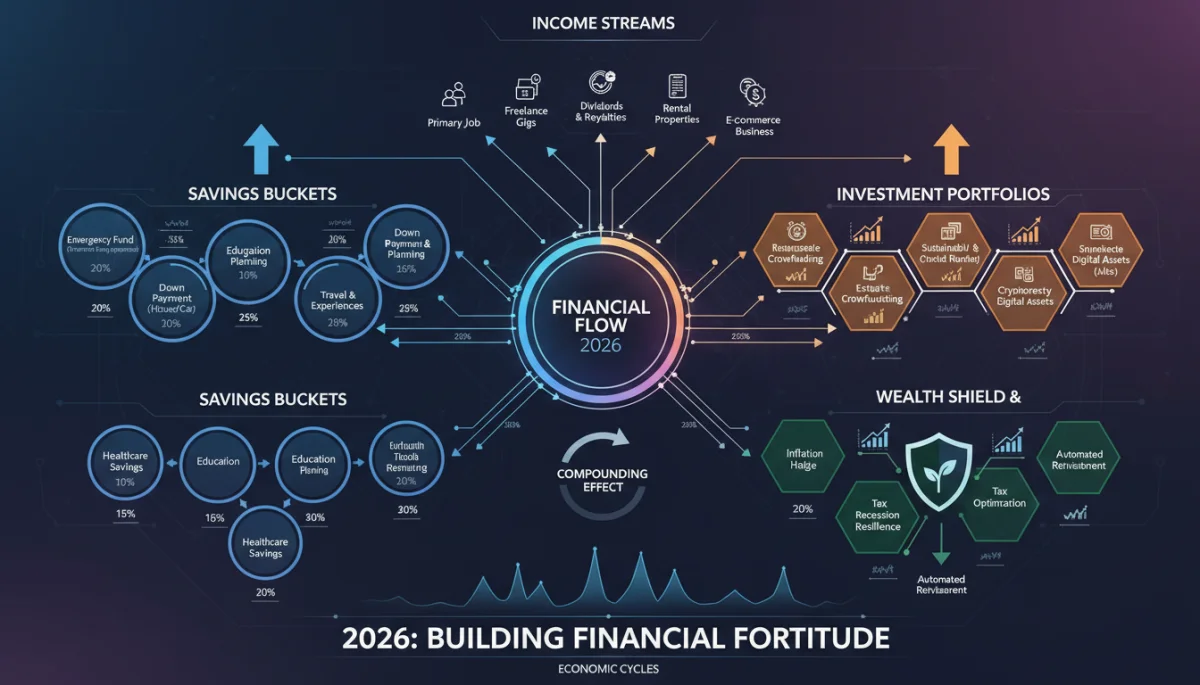
Saving money is one thing, but making it grow is another. In 2026, strategic investing will be crucial for not only preserving your wealth against inflation but also for accelerating its growth. The investment landscape is constantly evolving, and staying informed about promising sectors and sound investment principles is key.
Consider diversifying your investment portfolio across different asset classes. This includes traditional options like stocks and bonds, but also potentially exploring emerging markets or alternative investments that align with your risk tolerance. The goal is to build a robust portfolio that can withstand market volatility while capitalizing on growth opportunities.
Emerging Investment Opportunities
As the economy shifts, new investment opportunities arise. Being aware of these can provide an edge in your wealth-building journey.
- Sustainable Investments: Environmental, Social, and Governance (ESG) investing continues to gain traction, offering both financial returns and positive societal impact.
- Technology and AI: The rapid advancements in artificial intelligence and other technological sectors present high-growth potential, though often with higher risk.
- Real Estate (REITs): Real Estate Investment Trusts can offer a way to invest in real estate without directly owning property, providing diversification and potential income.
- Healthcare Innovation: With an aging population and continuous medical breakthroughs, the healthcare sector often presents stable long-term growth opportunities.
Before making any investment decisions, it’s vital to conduct thorough research and consider consulting a financial advisor. Understanding the risks involved and aligning investments with your personal financial goals and timeline will contribute significantly to your success in reaching and exceeding your 15% savings rate.
Debt Management and Its Impact on Savings
Debt can be a significant impediment to achieving a healthy savings rate. High-interest debt, such as credit card balances or personal loans, can consume a large portion of your income, leaving less for savings. In 2026, a proactive approach to debt management is essential to free up funds and accelerate your financial progress.
Prioritizing high-interest debt repayment can save you a substantial amount of money in interest fees over time. Strategies like the debt snowball or debt avalanche can provide a structured approach to tackling your obligations. The debt snowball focuses on paying off the smallest debts first for psychological wins, while the debt avalanche targets debts with the highest interest rates to save money.
Strategies for Effective Debt Reduction
Implementing effective debt reduction strategies can free up capital that can then be redirected toward your savings goals. It’s about creating a clear plan and sticking to it.
- Consolidate High-Interest Debt: Consider a balance transfer credit card with a 0% APR introductory period or a personal loan with a lower interest rate to consolidate multiple debts.
- Negotiate with Creditors: If you’re struggling, contact your creditors to discuss potential payment plans or reduced interest rates.
- Avoid New Debt: During your debt reduction phase, make a conscious effort to avoid taking on any new debt, especially for non-essential purchases.
- Budget for Debt Repayment: Integrate debt payments into your budget as a non-negotiable expense, ensuring consistent progress.
By strategically managing and reducing your debt, you not only improve your credit score but also significantly increase your capacity to save. This liberation from debt provides a powerful boost to your efforts in achieving a 15% savings rate and securing your financial future.
Leveraging Technology for Financial Success
In 2026, technology plays an increasingly pivotal role in personal finance. From budgeting apps to robo-advisors, digital tools can simplify complex financial tasks, provide valuable insights, and help you stay on track with your savings goals. Embracing these innovations can make managing your money more efficient and less daunting.
Many financial apps offer features such as automatic expense tracking, budget categorization, and real-time alerts. These tools can provide a clear overview of your spending habits and help identify areas where you can cut back. Furthermore, some apps offer personalized financial advice, helping you make smarter decisions tailored to your unique situation.
Digital Tools to Enhance Your Savings Journey
A range of technological solutions is available to support your quest for a 15% savings rate. Choosing the right tools can significantly streamline your financial management.
- Budgeting Apps: Tools like Mint, YNAB (You Need A Budget), or Personal Capital offer comprehensive views of your finances, tracking income, expenses, and net worth.
- Robo-Advisors: Platforms such as Betterment or Wealthfront provide automated investment management at a lower cost than traditional financial advisors, making investing more accessible.
- High-Yield Savings Accounts: Online banks often offer higher interest rates on savings accounts, allowing your money to grow faster with minimal effort.
- Spending Trackers: Simple apps that categorize your purchases can highlight areas of overspending, enabling quick adjustments to your budget.
Integrating these technological solutions into your financial routine can automate much of the heavy lifting associated with budgeting, saving, and investing. By leveraging these tools, you can maintain focus on your 15% savings goal, making the journey both easier and more effective.
| Key Aspect | Brief Description |
|---|---|
| Economic Awareness | Understanding 2026 trends like inflation and interest rates is crucial for adaptive financial planning. |
| Budgeting & Saving | Implement strategies like 50/30/20 rule and automation to achieve a 15% savings rate. |
| Smart Investing | Diversify portfolios and explore emerging sectors like tech and ESG for growth. |
| Debt Management | Prioritize high-interest debt repayment to free up funds for increased savings. |
Frequently Asked Questions About Personal Finance in 2026
The primary challenges include managing ongoing inflation, navigating potential interest rate volatility, and adapting to shifts in the job market. These factors can impact purchasing power, borrowing costs, and income stability, making proactive financial planning essential for individuals.
To reach a 15% savings rate, focus on strict budgeting, such as the 50/30/20 rule, and automate savings transfers. Additionally, explore opportunities to increase your income through side hustles or career advancement, while diligently cutting unnecessary expenses.
Diversification remains key. Consider a balanced portfolio including stocks, bonds, and potentially alternative assets. Emerging sectors like sustainable investments, AI, and healthcare innovation may offer growth, but always align investments with your risk tolerance and long-term goals.
High-interest debt significantly reduces the funds available for saving. By prioritizing and aggressively paying down debts like credit card balances, you free up more of your income to allocate towards your savings goals, accelerating your path to financial freedom.
Budgeting apps (Mint, YNAB), robo-advisors (Betterment, Wealthfront), and high-yield online savings accounts are invaluable. These tools automate tracking, investing, and help grow savings efficiently, simplifying complex financial management tasks for individuals.
Conclusion
Achieving a 15% savings rate in 2026 is an ambitious yet entirely attainable goal for anyone committed to securing their financial future. By staying informed about economic trends, implementing rigorous budgeting, optimizing income and expenses, making strategic investment choices, and diligently managing debt, you can navigate the complexities of the modern financial landscape. Leveraging available technology further streamlines this process, making financial management more accessible and effective. The journey to financial stability and growth is continuous, requiring adaptability and consistent effort, but the rewards of a robust savings rate are well worth the dedication.
