Student Loan Forgiveness 2026: Eligibility for Federal Programs
Anúncios
Understanding the most recent student loan forgiveness updates for 2026 is essential for borrowers to determine their eligibility for federal relief programs and navigate the complexities of debt cancellation.
Anúncios
Are you wondering about the future of your student loan debt? The landscape of student aid and relief is constantly evolving, and keeping up with the latest information is key. This article will delve into the critical student loan forgiveness updates for 2026, helping you understand if you are eligible for the latest federal programs designed to alleviate the burden of student debt.
Understanding the Current Student Loan Forgiveness Landscape
The journey through student loan repayment can be daunting, and the prospect of forgiveness offers a significant glimmer of hope for many Americans. As we look towards 2026, it’s vital to grasp the foundational programs and recent adjustments that shape the current student loan forgiveness landscape. These initiatives aim to provide relief for various borrower situations, from those in public service to individuals facing financial hardship.
Anúncios
The federal government has consistently introduced and modified programs to address the growing student debt crisis. While the specifics can be intricate, a clear understanding of each program’s intent and requirements is the first step toward determining your eligibility. It’s not a one-size-fits-all solution, and different paths exist for different borrowers.
Key Federal Forgiveness Programs Overview
Several prominent federal programs continue to be the primary avenues for student loan forgiveness. Each has distinct criteria and benefits, catering to different segments of the borrower population.
- Public Service Loan Forgiveness (PSLF): Designed for individuals working full-time for qualifying government or non-profit organizations.
- Income-Driven Repayment (IDR) Plan Forgiveness: Offers forgiveness after 20 or 25 years of payments on an eligible IDR plan, depending on the plan and loan type.
- Teacher Loan Forgiveness: Provides relief for teachers who work in low-income schools or educational service agencies for a specific period.
- Total and Permanent Disability (TPD) Discharge: For borrowers who are unable to engage in any substantial gainful activity due to a physical or mental impairment.
Beyond these, there are also more specific discharges, such as those for school closures or false certification. Each program plays a crucial role in the broader strategy to manage student debt, and understanding their nuances is paramount for borrowers seeking relief.
As we approach 2026, the ongoing discussions and potential legislative changes mean that staying informed is more important than ever. While the core programs remain, their implementation and any new initiatives could significantly impact who qualifies and how. This section lays the groundwork for a deeper dive into each of these critical forgiveness pathways.
Public Service Loan Forgiveness (PSLF) in 2026
The Public Service Loan Forgiveness (PSLF) program remains a cornerstone of federal student debt relief for those dedicated to public service. As of 2026, the core requirements for PSLF are expected to remain consistent, focusing on eligible employment and timely payments. Understanding these criteria is crucial for anyone pursuing this path to loan cancellation.
PSLF is designed to incentivize and support individuals who choose careers in government or non-profit sectors. It offers forgiveness of the remaining balance on Direct Loans after 120 qualifying monthly payments have been made under a qualifying repayment plan while working full-time for a qualifying employer. This program has seen significant attention and some temporary waivers in recent years, making it essential to be aware of the standard rules now in effect or anticipated for 2026.
Eligibility Requirements for PSLF
To qualify for PSLF, borrowers must meet specific criteria that encompass their loans, employment, and repayment history. Deviating from any of these can jeopardize eligibility.
- Qualifying Loans: Only Direct Loans are eligible for PSLF. If you have Federal Family Education Loan (FFEL) Program loans or Perkins Loans, you would need to consolidate them into a Direct Consolidation Loan to become eligible.
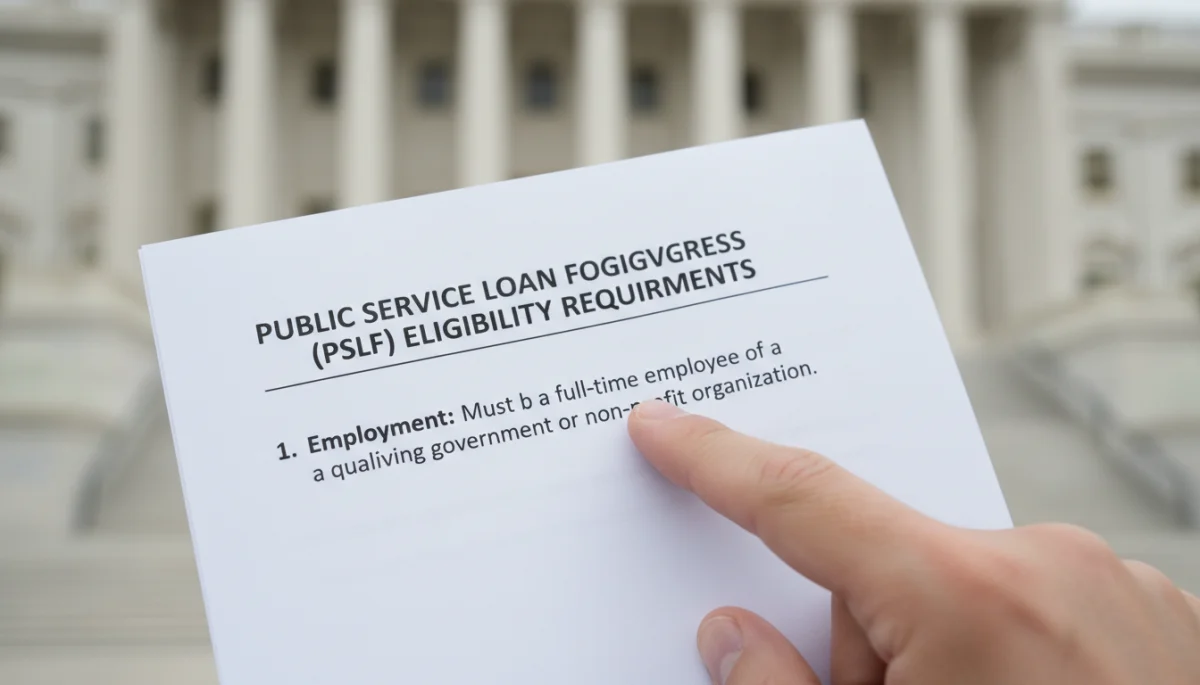
- Qualifying Employment: You must be employed full-time by a U.S. federal, state, local, or tribal government agency (including military service) or a not-for-profit organization that is tax-exempt under Section 501(c)(3) of the Internal Revenue Code.
- Qualifying Payments: You must make 120 qualifying monthly payments. These payments must be made under a qualifying repayment plan (typically an Income-Driven Repayment plan), for the full amount due, and no later than 15 days after your due date.
It’s important to certify your employment annually or whenever you change employers using the PSLF Help Tool. This ensures that your payments are being counted correctly and helps avoid surprises when you apply for forgiveness. Failing to certify can lead to issues down the line, so proactive engagement with this process is highly recommended.
While temporary waivers have offered flexibility in the past, borrowers looking towards 2026 should plan to meet the standard PSLF requirements. This includes ensuring all 120 payments are made under an eligible IDR plan and that employment is consistently certified. The program continues to be a vital avenue for debt relief for dedicated public servants, and understanding its nuances is key to successful forgiveness.
Income-Driven Repayment (IDR) Plan Forgiveness
Income-Driven Repayment (IDR) plans provide a crucial safety net for borrowers whose incomes make standard loan payments unaffordable. These plans adjust monthly payments based on income and family size, and critically, they offer forgiveness of any remaining loan balance after a specified period, typically 20 or 25 years. For 2026, the structure and benefits of IDR plans, including the newer SAVE plan, are expected to play a significant role in student loan relief.
The underlying principle of IDR plans is to prevent default by making loan payments manageable. While the idea of making payments for two decades or more might seem long, the ultimate promise of forgiveness can be a powerful incentive for borrowers to stay enrolled and consistent. The details of each IDR plan vary, affecting payment amounts and the timeline for forgiveness.
The SAVE Plan and Other IDR Options
The Biden-Harris Administration introduced the Saving on a Valuable Education (SAVE) Plan, which has significantly enhanced the benefits of IDR for many borrowers. The SAVE Plan offers more affordable monthly payments and a faster path to forgiveness for some, particularly those with lower original loan balances.
- SAVE Plan: Offers the lowest monthly payments among IDR plans, often $0 for low-income borrowers, and prevents interest capitalization as long as payments are made. Forgiveness can occur in as little as 10 years for original loan balances of $12,000 or less.
- Pay As You Earn (PAYE): Payments are generally 10% of discretionary income, forgiven after 20 years.
- Income-Based Repayment (IBR): Payments are 10% or 15% of discretionary income, forgiven after 20 or 25 years, depending on when you borrowed.
- Income-Contingent Repayment (ICR): Payments are either 20% of discretionary income or what you would pay on a 12-year fixed repayment plan, forgiven after 25 years.
It’s critical for borrowers to re-certify their income and family size annually to ensure their payments remain accurate and to continue progressing towards forgiveness. Failure to re-certify can lead to higher payments and potential capitalization of interest, which increases the total amount owed. The benefits of IDR, especially the SAVE plan, can be substantial, making it a key consideration for many borrowers seeking long-term relief.
For those enrolled in IDR plans, 2026 will continue to be a year of making consistent payments towards the eventual goal of forgiveness. Understanding which plan is best suited for your financial situation and actively managing your enrollment are essential steps towards achieving this debt relief.
Teacher Loan Forgiveness and Other Targeted Programs
Beyond the broader PSLF and IDR programs, the federal government offers several targeted loan forgiveness and discharge options designed to address specific professions or circumstances. Teacher Loan Forgiveness is a prominent example, recognizing the vital role educators play, particularly in underserved communities. These specialized programs often have unique eligibility criteria and benefits, making it crucial for borrowers to investigate if they fall into any of these categories for potential relief in 2026.
These targeted programs are often created to address shortages in critical fields or to provide support to individuals facing exceptional hardships. While they may apply to a smaller segment of the borrower population, their impact on those eligible can be profound, offering a direct path to significant debt reduction.
Eligibility for Teacher Loan Forgiveness
The Teacher Loan Forgiveness program is specifically for teachers who commit to working in low-income schools. The amount of forgiveness depends on the subject taught.
- Service Requirement: You must teach full-time for five complete and consecutive academic years in a low-income elementary or secondary school, or educational service agency.
- Loan Type: Eligible loans include Direct Subsidized and Unsubsidized Loans, and Federal Family Education Loan (FFEL) Program Subsidized and Unsubsidized Stafford Loans.
- Forgiveness Amount: Up to $17,500 for highly qualified math, science, or special education teachers, and up to $5,000 for other eligible teachers.
Other Targeted Discharges and Forgiveness
Several other federal programs offer discharges or forgiveness for specific situations:
- Total and Permanent Disability (TPD) Discharge: For borrowers who are completely and permanently disabled.
- Closed School Discharge: If your school closed while you were enrolled or shortly after you withdrew, you might be eligible to have your federal student loans discharged.
- Borrower Defense to Repayment: For borrowers who were misled by their school, or whose school engaged in other misconduct in violation of state law.
- False Certification Discharge: If your school falsely certified your eligibility to receive federal student loans.
Each of these programs has a detailed application process and specific evidence requirements. It’s essential for borrowers to thoroughly research and gather all necessary documentation if they believe they qualify for one of these targeted forms of relief. For 2026, these avenues will continue to provide critical support for those who meet their unique criteria, offering a path to financial freedom from student debt.
Navigating Application Processes and Documentation for 2026
Successfully obtaining student loan forgiveness in 2026 hinges not just on eligibility, but also on meticulously navigating the application processes and providing accurate documentation. Each forgiveness program has its own specific forms, deadlines, and evidentiary requirements. A thorough understanding of these administrative steps is paramount to ensure your application is processed efficiently and successfully.
The application process can sometimes feel overwhelming due to the amount of paperwork and the need for precision. However, careful attention to detail and proactive engagement can significantly increase your chances of approval. It’s not enough to simply meet the criteria; you must also prove that you meet them through appropriate documentation.
Key Steps for Applying for Forgiveness
While specific steps vary by program, some general guidelines apply to most forgiveness applications:
- Research Eligibility: Before starting any application, thoroughly review the specific requirements for the program you are interested in. Ensure you meet all criteria.
- Gather Documentation: This often includes employment verification forms, income records, disability documentation, or school transcripts, depending on the program. Keep organized records of all payments and correspondence.
- Complete Application Forms: Fill out all required forms accurately and completely. Incomplete or incorrect information can lead to delays or denials.
- Submit on Time: Be aware of any deadlines associated with the forgiveness program. Some programs may have rolling applications, while others have specific windows.
- Follow Up: After submission, it’s wise to follow up with your loan servicer or the Department of Education to confirm receipt and inquire about the status of your application.
Common Pitfalls to Avoid
Many borrowers encounter issues during the application process that can be easily avoided with careful planning:
- Incorrect Loan Type: Applying for a program with ineligible loan types (e.g., trying to get PSLF with FFEL loans without consolidation).
- Missing or Incomplete Documentation: Failing to provide all required forms or leaving sections blank.
- Not Certifying Employment (PSLF): For PSLF, annual employment certification is crucial and often overlooked.
- Not Recertifying Income (IDR): For IDR plans, annual income recertification is mandatory to maintain eligible payments.
For 2026, staying organized and informed will be your best allies. Utilize official resources from the Department of Education and your loan servicer. Don’t hesitate to seek clarification if you are unsure about any part of the process. Proactive management of your application ensures you are well-positioned to receive the forgiveness you qualify for.
Potential Legislative Changes and Future Outlook for 2026
The landscape of student loan forgiveness is not static; it is continually shaped by policy discussions, legislative efforts, and administrative actions. As we look towards 2026, it’s important for borrowers to remain aware of potential legislative changes and the broader future outlook for federal student aid programs. While current programs provide significant relief, new proposals or modifications could further impact eligibility and the availability of forgiveness.
Government administrations often review and propose reforms to address economic realities and public needs. These potential changes could range from adjustments to existing programs, such as expanding eligibility or altering forgiveness timelines, to the introduction of entirely new initiatives. Staying informed about these developments is crucial for strategic financial planning.
Upcoming Policy Debates
Several areas are frequently discussed in policy circles that could influence student loan forgiveness:
- Simplification of IDR Plans: Efforts to streamline and simplify the various Income-Driven Repayment plans are ongoing, potentially making them easier for borrowers to navigate and access forgiveness.
- Broader Loan Forgiveness Initiatives: While broad-based forgiveness has faced legal challenges, discussions about targeted forgiveness for specific groups or a more universal approach may continue.
- Changes to PSLF Rules: Although PSLF has been bolstered recently, future administrations could propose adjustments to employer definitions or payment counting rules.
- Interest Rate Reforms: Proposals to reform how student loan interest accrues or is capped could indirectly affect the total amount borrowers owe, and thus the amount needing forgiveness.
Borrowers should monitor official government announcements, reputable financial news sources, and updates from the Department of Education. Relying on verified information is critical to avoid misinformation and make informed decisions about your student loans. Engaging with advocacy groups can also provide insights into potential changes and how they might affect you.
The future of student loan forgiveness in 2026 and beyond will likely depend on a combination of economic conditions, political will, and ongoing public discourse. While the core federal programs are expected to remain, their evolution could offer new opportunities or require borrowers to adapt to new rules. Proactive engagement with these developments ensures you are prepared to take advantage of any available relief.
Resources and Support for Student Loan Borrowers
Navigating the complexities of student loan forgiveness can be challenging, but borrowers are not alone. Numerous resources and support systems are available to help understand eligibility, manage applications, and make informed decisions about student debt. For 2026, knowing where to turn for reliable information and assistance is just as important as understanding the programs themselves.
Access to accurate, up-to-date information is paramount. The official channels and reputable organizations provide the most trustworthy guidance, helping borrowers avoid scams and make the best choices for their financial future. These resources range from government websites to non-profit counseling services.
Official Government Resources
The U.S. Department of Education is the primary source for all federal student loan information:
- Federal Student Aid (StudentAid.gov): This website is the official hub for information on federal student aid, including detailed explanations of all forgiveness programs, eligibility requirements, and application forms. It also hosts the PSLF Help Tool and allows you to manage your federal loans.
- Your Loan Servicer: Your loan servicer (e.g., MOHELA, Nelnet) is your direct point of contact for specific questions about your loans, payment history, and application status. They can provide personalized assistance regarding your account.
Trusted Non-Profit and Educational Resources
Beyond government sites, several non-profit organizations and educational institutions offer free, unbiased advice:
- National Consumer Law Center (NCLC): Provides legal advocacy and policy analysis on consumer issues, including student loan debt.
- Consumer Financial Protection Bureau (CFPB): Offers tools and resources to help consumers manage their finances, including student loan guides and complaint submission options.
- Accredited Financial Counselors: Organizations like the National Foundation for Credit Counseling (NFCC) can connect you with certified counselors who offer free or low-cost student loan counseling.
When seeking information, always verify the source’s credibility. Be wary of companies that promise guaranteed forgiveness for a fee or ask for your Federal Student Aid (FSA) ID, as these are often scams. The official resources are designed to be freely accessible and provide all the necessary tools for self-service.
For 2026, empowering yourself with knowledge and utilizing available support systems will be crucial steps in managing your student loan debt effectively and pursuing any eligible forgiveness. Don’t hesitate to reach out to these resources for guidance and clarification, ensuring you make the most informed decisions possible.
| Key Program | Brief Description |
|---|---|
| Public Service Loan Forgiveness (PSLF) | Forgiveness after 120 qualifying payments for full-time public service employees. |
| Income-Driven Repayment (IDR) | Payments based on income; remaining balance forgiven after 20-25 years. |
| Teacher Loan Forgiveness | Up to $17,500 forgiveness for teachers in low-income schools after 5 years. |
| Total & Permanent Disability Discharge | Loan discharge for borrowers with a total and permanent disability. |
Frequently Asked Questions About Student Loan Forgiveness 2026
Eligibility for student loan forgiveness in 2026 largely depends on the specific program. Key factors include your employment type (e.g., public service), loan type (Direct Loans often required), repayment history (consistent payments), and income level for income-driven plans. Each program has unique requirements that must be met.
While existing federal programs like PSLF and IDR forgiveness are expected to continue, the possibility of new programs by 2026 depends on future legislative actions and administrative policy changes. Borrowers should monitor official government announcements and reliable financial news sources for the latest updates on potential new initiatives.
The SAVE Plan, an Income-Driven Repayment option, offers a faster path to forgiveness for some borrowers. For those with original loan balances of $12,000 or less, forgiveness can occur after as few as 10 years of qualifying payments. This is a significant reduction compared to the 20 or 25 years required by other IDR plans.
If you believe you’re eligible for PSLF but your payments aren’t counting, first ensure you have Direct Loans and qualifying employment. Then, use the PSLF Help Tool on StudentAid.gov to certify your employment. Contact your loan servicer to review your payment history and address any discrepancies. Consistent annual certification is vital.
No, federal student loan forgiveness programs, including PSLF, IDR forgiveness, and teacher loan forgiveness, exclusively apply to federal student loans. Private student loans are not eligible for these federal relief initiatives. Borrowers with private loans should explore options directly with their private lenders, such as refinancing or hardship programs.
Conclusion
As we navigate the complexities of federal student loan forgiveness programs towards 2026, it’s clear that staying informed and proactive is paramount for any borrower seeking relief. The landscape, while evolving, continues to offer significant opportunities through established pathways like Public Service Loan Forgiveness, various Income-Driven Repayment plans, and targeted discharges for specific professions or circumstances. Understanding the detailed eligibility criteria for each program, meticulously managing your documentation, and being aware of potential legislative shifts are crucial steps. By utilizing official government resources and seeking trusted advice, borrowers can effectively position themselves to benefit from the student loan forgiveness updates for 2026, moving closer to financial freedom and alleviating the burden of student debt.
